
The Sardine Fast
Why 72 Hours of Fish Might Outperform Water Fasting

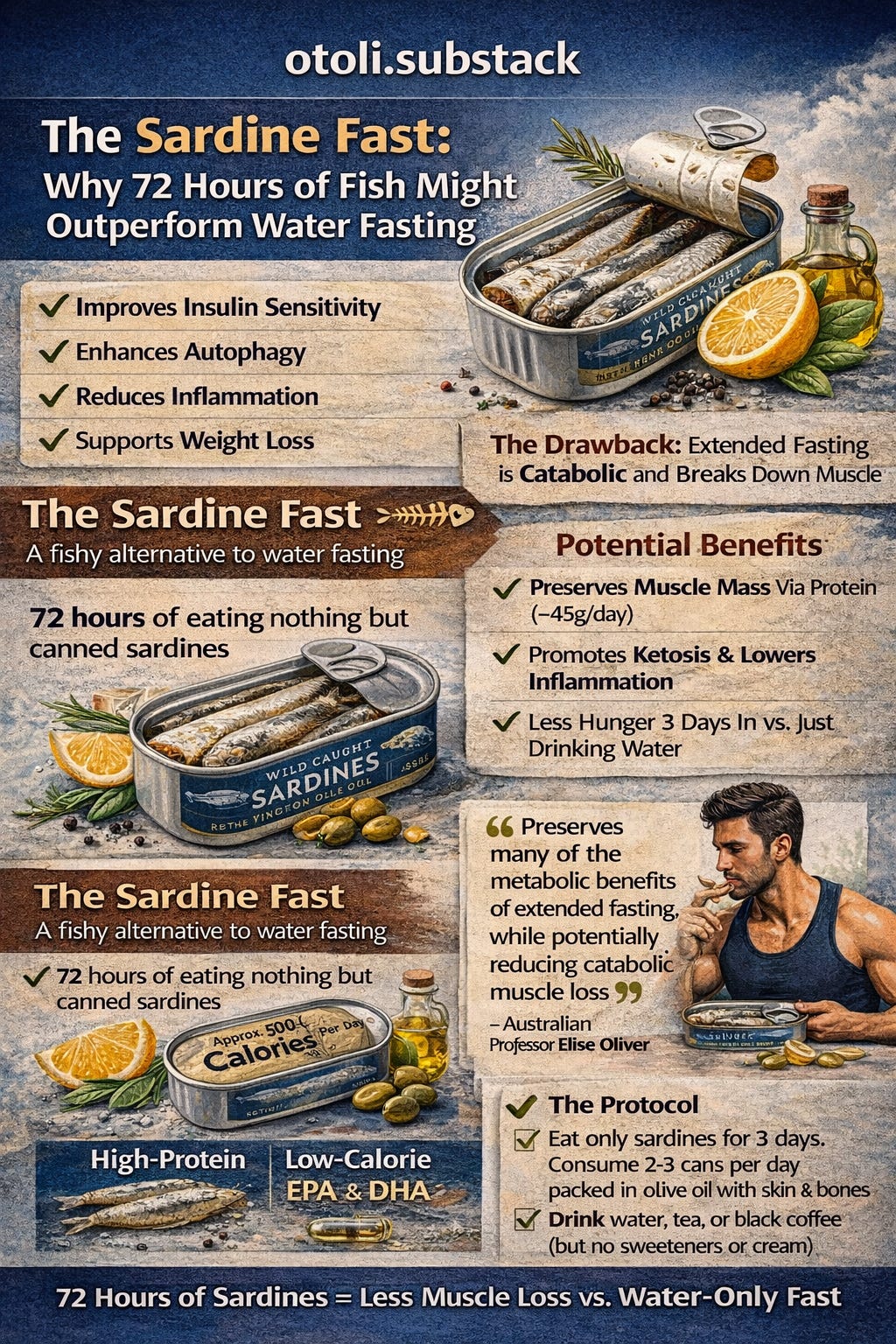
Fasting has dominated the metabolic health conversation for years. Time restricted eating, alternate day fasting, extended water fasts, and fasting mimicking diets have all accumulated devoted followings. The benefits are well documented. Improved insulin sensitivity. Enhanced autophagy. Reduced inflammation. Weight loss without the metabolic adaptation that accompanies chronic caloric restriction.
But traditional fasting carries a significant drawback. Extended periods without food are catabolic. The body breaks down muscle tissue for gluconeogenesis, converting amino acids into glucose to fuel the brain and other glucose dependent tissues. For those concerned about preserving lean mass, this presents a genuine dilemma. The metabolic benefits of fasting come packaged with muscle loss that can take weeks to recover.
A modified approach known as sardine fasting has emerged as a potential solution. The protocol involves consuming nothing but sardines for three to five days, entering deep ketosis while providing enough protein and essential fatty acids to spare muscle tissue. Proponents argue it delivers the benefits of extended fasting without the catabolic cost.
The concept sounds almost absurdly simple. Eat sardines. Only sardines. For days.
The science behind why this might work is considerably more sophisticated.
Origins of the Protocol
The sardine fast was not designed in a laboratory or derived from first principles. It emerged accidentally when researchers working extended hours in metabolic labs found themselves relying on canned sardines as a convenient, shelf stable food source. The observation that this monotonous diet produced unexpected clarity, sustained energy, and apparent metabolic benefits prompted more systematic investigation.
Early adopters included individuals managing serious illness. Anecdotal reports described cancer patients using sardine fasting protocols alongside conventional treatment, with some reporting remission. While these accounts do not constitute clinical evidence, they generated interest in understanding what made this approach distinctive.
The theoretical framework draws on fasting mimicking diet research. The goal is to provide minimal calories while maximising nutrient density, allowing the body to enter fasting physiology without complete nutrient deprivation. Sardines, consumed whole with skin and bones intact, represent an unusually complete nutritional package in a very small caloric envelope.
The Protocol
The regimen is straightforward. For three to five days, the individual consumes only sardines. No other foods. No caloric beverages. Water, tea, and black coffee are permitted.
Daily intake typically involves two to three cans, divided into one or two meals. This provides approximately 500 calories per day, creating a substantial energy deficit while delivering high quality protein and fat.
Selection matters considerably. The sardines should be packed in extra virgin olive oil rather than soybean oil or other industrial seed oils. Crucially, they must include both skin and bones. Many commercial sardine products remove these components to improve palatability, but doing so eliminates much of the nutritional value that makes the protocol effective.
Brands vary in quality. Reading labels carefully is essential. The fish should be wild caught, and the ingredient list should be short. Sardines, olive oil, and perhaps salt. Nothing else.
The protocol is not meant for indefinite use. Three to five days represents the typical duration, followed by careful reintroduction of other foods. Some practitioners repeat the protocol monthly or quarterly as a metabolic reset.
Why Sardines Specifically
The selection of sardines over other protein sources reflects their extreme nutrient density. When operating on 500 calories daily, every bite must deliver maximum nutritional value. Sardines accomplish this remarkably well.
A standard serving provides roughly 15 grams of protein and 15 grams of fat. The protein is complete, containing all essential amino acids in appropriate ratios for human physiology. The fat profile is dominated by omega 3 fatty acids, specifically EPA and DHA, in concentrations that dwarf most other food sources.
Consuming the fish whole, bones included, provides substantial calcium. A single can delivers a significant fraction of daily calcium requirements. The combination of calcium and vitamin D (sardines are one of the few food sources containing meaningful vitamin D) supports bone health during what would otherwise be a nutritionally precarious period.
This nutrient density may explain why the diet proves more sustainable than expected. Hunger during extended water fasting can become overwhelming by day two or three. Sardine fasters report considerably less difficulty, with hunger diminishing rather than intensifying as the protocol progresses.
One hypothesis suggests the body generates hunger signals partly to ensure adequate micronutrient intake. When nutritional needs are comprehensively met, even at low caloric intake, the drive to eat diminishes. Calcium intake specifically has been linked to appetite regulation. The body may signal hunger until calcium requirements are satisfied, a threshold easily reached when consuming whole sardines with bones.
The high protein content also contributes to satiety. Protein is the most satiating macronutrient, and 45 grams daily (from three cans) appears sufficient to blunt appetite substantially.
Metabolic Effects
The physiological response to sardine fasting resembles traditional extended fasting in several respects while diverging in others.
Insulin levels drop significantly within the first 24 to 48 hours. Without dietary carbohydrate and with only modest protein intake, there is minimal stimulus for insulin secretion. Blood glucose stabilises at low normal levels as the body shifts to fat oxidation for primary fuel.
Ketone production increases markedly. By day two or three, most individuals enter nutritional ketosis, with blood ketone levels rising into the range associated with extended fasting. Some practitioners describe this state as “euphoric ketosis,” characterised by mental clarity, stable energy, and elevated mood. The experience differs from the fatigue and mental fog that often accompanies the first days of water fasting.
The presence of dietary fat, particularly omega 3 fatty acids, may smooth the transition into ketosis. The body receives a continuous supply of fatty acids for conversion to ketones, rather than relying entirely on mobilisation from adipose tissue. This potentially explains why sardine fasters report fewer of the unpleasant adaptation symptoms common during water fasting initiation.
Inflammation markers respond dramatically. High sensitivity C reactive protein, a commonly measured marker of systemic inflammation, drops to nearly undetectable levels in some individuals following sardine fasting protocols. This likely reflects the combination of caloric restriction (which independently reduces inflammation) and the anti inflammatory effects of omega 3 fatty acids.
The omega 3 content deserves particular emphasis. EPA and DHA are precursors to resolvins and protectins, specialised pro resolving mediators that actively terminate inflammatory responses. Consuming large quantities of these fatty acids while simultaneously restricting inflammatory dietary components (processed foods, refined carbohydrates, industrial seed oils) creates conditions for profound inflammatory reduction.
Muscle Sparing Effects
The critical distinction between sardine fasting and water fasting lies in body composition outcomes. Extended water fasting is unambiguously catabolic. Without dietary protein, the body cannibalises muscle tissue to meet amino acid requirements. Studies of prolonged fasting consistently demonstrate lean mass loss alongside fat loss.
Sardine fasting appears to mitigate this effect substantially. The protein intake, while modest, provides amino acids for essential functions without requiring muscle breakdown. The omega 3 fatty acids may offer additional protection through effects on muscle protein synthesis and breakdown signalling pathways.
Research on omega 3 supplementation in various contexts suggests these fatty acids have anabolic or anti catabolic properties. They may enhance the muscle protein synthetic response to amino acids, improve insulin sensitivity in muscle tissue, and reduce inflammatory signalling that promotes protein breakdown. During a hypocaloric state, these effects could meaningfully shift the balance toward muscle preservation.
Anecdotal reports from sardine fasters consistently describe preservation or even improvement in body composition despite the severe caloric restriction. Individuals report “leaning out” during the protocol while maintaining strength and muscle fullness. While these observations lack the rigour of controlled studies, they align with the theoretical framework.
Practical Considerations
Sardine fasting is not for everyone. The protocol requires consuming a food that many find challenging. The taste is distinctive. The smell is assertive. Eating sardines exclusively for multiple days demands genuine commitment.
For those who cannot tolerate sardines, alternative single food protocols have been explored. An egg fast, involving consumption of approximately seven eggs daily for three to five days, represents one option. Eggs share some characteristics with sardines: high nutrient density, complete protein, substantial fat content, and good micronutrient profiles. However, eggs lack the omega 3 content that distinguishes sardines, and some individuals report difficulty sleeping during egg fasting, possibly due to stimulation of the sympathetic nervous system.
Mackerel represents another alternative for those who prefer a different fish. The nutritional profile resembles sardines, though mackerel is typically sold in larger portions that may complicate precise intake control.
The reintroduction phase following any extended restriction protocol warrants careful attention. The temptation to “reward” oneself with indulgent foods after days of sardines proves considerable. However, breaking the fast with highly processed, high carbohydrate foods can rapidly reverse the metabolic benefits achieved. The recommendation is to cap calories and emphasise whole foods for the first week following the protocol, gradually expanding dietary variety while maintaining the anti inflammatory foundation.
Who Might Benefit
Sardine fasting occupies a specific niche in the landscape of dietary interventions. It offers a middle path between normal eating and complete fasting, providing many benefits of extended fasting while reducing some drawbacks.
Candidates might include individuals who have found water fasting too difficult to sustain, those concerned about muscle loss during extended restriction, people seeking to rapidly reduce inflammation, and anyone interested in exploring ketosis without committing to a sustained ketogenic diet.
The protocol also functions as a reset or intervention rather than an ongoing dietary pattern. Using sardine fasting quarterly or when metabolic markers have drifted in unfavourable directions provides periodic recalibration without requiring permanent dietary restriction.
Those with fish allergies obviously cannot undertake this protocol. Individuals with gout should exercise caution, as sardines are high in purines which can elevate uric acid levels. Anyone with serious medical conditions should consult healthcare providers before undertaking extended restriction of any kind.
Australian Market Availability
Australian consumers have good access to quality sardines, though selection requires attention. Wild Planet and King Oscar are available through specialty grocers and online retailers, typically priced between $5 and $8 AUD per can. Domestic options exist as well, with brands like Safcol and Brunswick offering products that meet protocol requirements when packed in olive oil with skin and bones intact.
Reading labels remains essential. Many supermarket sardine products are packed in sunflower oil or soybean oil, which undermines the anti inflammatory intent of the protocol. Some products labelled as sardines are actually sprats or brisling, which are acceptable alternatives but may have slightly different nutritional profiles.
Purchasing in bulk reduces per unit cost and ensures supply for the full protocol duration. A five day sardine fast requires approximately 10 to 15 cans, representing an investment of $50 to $120 AUD depending on brand selection. This compares favourably with normal food expenditure over the same period.
The Bigger Picture
Sardine fasting reflects a broader recognition that fasting benefits derive from specific physiological states rather than from caloric absence per se. What matters is low insulin, elevated ketones, reduced inflammation, and activation of cellular maintenance pathways. If these states can be achieved while providing essential nutrition, the argument for complete food restriction weakens.
The protocol also highlights the remarkable nutritional completeness of certain whole foods. Sardines consumed with skin and bones approach a nutritionally complete food source in ways that isolated protein powders or supplement stacks cannot replicate. This has implications beyond fasting protocols, suggesting that strategic incorporation of whole small fish into regular diets might confer benefits independent of any restriction framework.
For those willing to embrace three to five days of monotonous eating, sardine fasting offers a compelling experiment. The barrier to entry is lower than water fasting. The experience is reportedly more tolerable. The metabolic outcomes appear comparable or superior. And the muscle sparing effects address perhaps the most significant limitation of traditional extended fasting.
The concept is not complicated. The fish are affordable and widely available. The protocol requires no special equipment, preparation skills, or medical supervision for healthy individuals.
Sometimes the most effective interventions are also the simplest. A can of sardines, consumed whole, might deliver more metabolic benefit per dollar than any supplement on the market.
The body, as it turns out, knows what to do with real food.