
The Lomax Test
How a Failed Defection Could Redefine Contract Law in Australian Sport

The Lomax Test: How a Failed Defection Could Redefine Contract Law in Australian Sport
What began as a high-stakes defection to a rebel rugby union venture has dissolved into a domestic legal brawl that may set precedents for the next decade of athlete management in Australia.
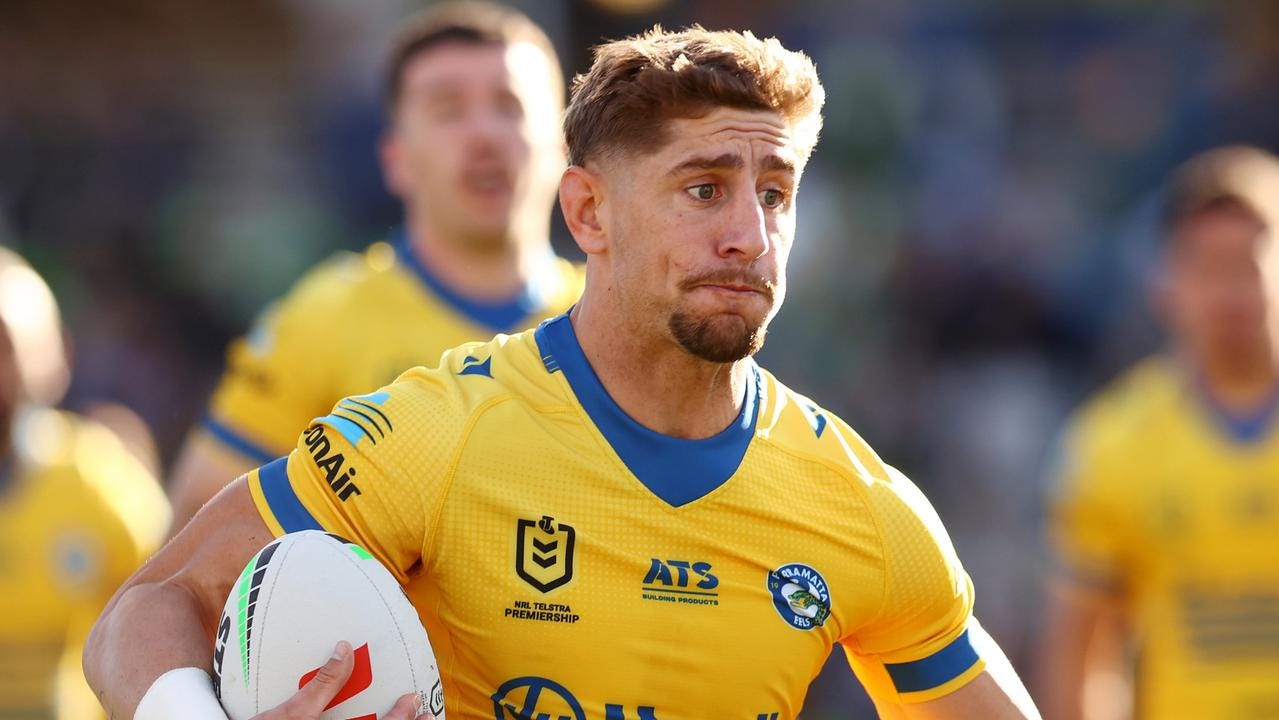
The unfolding legal saga between Zac Lomax, the Parramatta Eels, and the Melbourne Storm is not merely tabloid fodder. It is a volatile, real-time case study that challenges the very foundations of how player movement, asset valuation, and governance intersect in the National Rugby League.
The central question reaches beyond rugby league: can a club restrict a former employee’s trade after the employment relationship has ended?
The Context: A Conditional Exit
The facts of the case are essential for understanding the administrative breakdown.
In November 2025, Zac Lomax, midway through a four-year tenure with Parramatta, requested a release to join R360, a global, franchise-based rugby union competition backed by private equity. The Eels, recognising they could not match the inflated financial offers of a well-funded startup, granted the release.
However, the release was not unconditional.
Parramatta inserted a restrictive covenant: Lomax could not register with a rival NRL club until his original contract expired on 31 October 2028, without the Eels’ express written consent.
When R360 announced a two-year delay to its launch in late 2025 due to a lack of sanctioning and commercial viability, Lomax was left stranded. His attempt to pivot immediately to the Melbourne Storm has triggered a Supreme Court standoff that pits the “sanctity of contract” against the common law doctrine of “restraint of trade”.
The Legal Battleground
For students of sports law, the central question is whether a club can restrict a former employee’s ability to work after the employment relationship has effectively ended.
Parramatta’s legal argument, led by Arthur Moses SC, relies on the deed of release being a binding commercial agreement. The club argues it has a “legitimate protectable interest”, specifically its football programme, membership expectations, and competitive standing, which justifies the restraint. The precedent here echoes the historic Bulldogs v Williams case, where the court recognised that professional athletes provide “special services” and that clubs have a valid interest in preventing stars from boosting competitors.
Conversely, Lomax’s legal team, led by Ramy Qutami, will likely argue that the clause is an unreasonable restraint of trade. Under the Restraints of Trade Act 1976 (NSW), a restraint is valid only to the extent that it is not against public policy. If Parramatta is no longer paying Lomax, preventing him from earning a living in his primary market, the NRL, could be viewed by the court as punitive rather than protective.
The distinction matters. Protecting a legitimate business interest is defensible. Punishing a player for attempting to leave is not.
The Asset Valuation Problem
From a list management perspective, this dispute highlights a critical evolution in the NRL: the shift toward a codified transfer market.
The Melbourne Storm, facing a roster crisis with only roughly 21 fit NRL players available for 2026, viewed Lomax as a distressed asset they could acquire cheaply. Reports suggest Melbourne offered a transfer fee of approximately $200,000 (approximately USD $130,000).
Parramatta rejected this, viewing the fee as insufficient compensation for an Origin-calibre player. Instead, the Eels demanded a “fair exchange of value,” targeting elite Storm players like Stefano Utoikamanu or Xavier Coates in a swap deal.
This standoff illustrates a maturing administrative mindset where players are treated as assets with liquidated values rather than simply employees with contracts. If the court upholds Parramatta’s right to withhold consent, it establishes that player contracts hold residual value even after a release is requested, moving the NRL closer to a European football transfer model.
The implications extend beyond this single case. Every club holding a player under contract now has precedent for extracting value from that contract, even when the player has been released for purposes outside the competition.
The Governance Paradox
The role of the NRL administration in this saga offers a lesson in regulatory inconsistency.
In October 2025, ARLC Chairman Peter V’landys threatened 10-year bans for any player negotiating with R360, describing the rebel league as having come “out of a corn-flakes box”. The league’s stance was one of aggressive protectionism.
However, faced with the prospect of a star player sitting on the sidelines, reports indicate the NRL is now prepared to “intervene” to facilitate Lomax’s move to Melbourne if Parramatta refuses “reasonable offers”.
This creates a significant moral hazard.
If the governing body overrides a registered contract to assist a player who attempted to defect to a rival code, it undermines the deterrent effect of its own contracts and the authority of compliant clubs. Why would any club enforce contract terms if the governing body will simply override them when convenient?
Furthermore, this unfolds just as new anti-tampering rules are set to take effect on 1 February 2026, designed to stop clubs from inducing players to break contracts. Facilitating Lomax’s move to Melbourne would seem to contradict the spirit of these new integrity measures before the ink has dried.
The NRL finds itself in an impossible position: enforce the sanctity of contracts and strand a marquee player, or facilitate movement and undermine the very contractual frameworks that provide competitive stability.
What This Means for Future Contracts
Regardless of the Supreme Court’s decision, the Lomax case will reshape standard player contracts and release protocols across Australian sport.
Liquidated Damages Clauses
Future deeds of release will likely include specific buyout figures rather than subjective consent clauses. Clubs will want a pre-agreed price tag on a player’s return to the competition to avoid litigation. If Lomax wants to return to the NRL, the release might specify a $500,000 transfer fee payable to Parramatta. No ambiguity. No court required.
Due Diligence Obligations
The failure of R360 highlights a failure of agent due diligence. A competition without sanctioning, without confirmed broadcast partners, without guaranteed player payments, was treated as a viable destination for a contracted NRL player.
Future management agreements may require stricter vetting of alternative competitions before a player requests a release, protecting athletes from the career limbo Lomax currently faces. Agents who encourage clients to sign with unproven ventures may face professional consequences when those ventures collapse.
The End of the Compassionate Release
The era of releasing players early on good faith is likely over.
For decades, Australian sport operated on informal understandings. Players who wanted to leave were generally accommodated. Clubs accepted that forcing unhappy athletes to honour contracts created more problems than it solved.
Parramatta’s willingness to litigate signals a philosophical shift. Clubs will now enforce terms strictly, viewing the playing roster as a portfolio of assets to be protected rather than a collection of employee relationships to be managed. The handshake agreement is dead. The legal agreement is all that remains.
The Broader Implications
The Lomax case arrives at a moment of structural tension in Australian sport.
Private equity is circling rugby union globally, with ventures like R360 attempting to disrupt established competitions. The A-League continues navigating ownership instability. The AFL faces ongoing challenges with player movement and free agency restrictions.
Each of these contexts involves the same fundamental question: what rights do clubs have over players, and what rights do players have over their own careers?
If Parramatta prevails, clubs across Australian sport gain significant leverage. Contracts become genuine assets with enforceable value. Players requesting releases will face genuine consequences, not theoretical ones.
If Lomax prevails, the restraint of trade doctrine reasserts primacy. Clubs cannot prevent players from working simply because they are unhappy about the circumstances of departure. The right to earn a living trumps commercial preference.
The truth likely lies somewhere between these positions. The court may find the restraint unreasonable in duration or scope while acknowledging Parramatta’s legitimate interest in receiving compensation. A middle ground could establish that clubs can restrict movement but only for reasonable periods or with reasonable buyout provisions.
The Lesson
For administrators, agents, and athletes, the Lomax case offers a stark reminder: a contract is only as strong as the will to enforce it.
For years, Australian sport operated on the assumption that contractual provisions were negotiating positions rather than binding commitments. Players requested releases and received them. Clubs complained but ultimately accommodated. The system functioned on goodwill.
Parramatta has drawn a line in the sand. Whether that line holds will define the balance of power between clubs and players in Australian sport for years to come.
The Supreme Court will determine who wins this particular battle. The answer will shape how every contract is written, negotiated, and enforced for the next generation.
The Lomax case is scheduled for Supreme Court hearing in early 2026. This analysis is based on publicly reported facts and legal commentary as of January 2026.